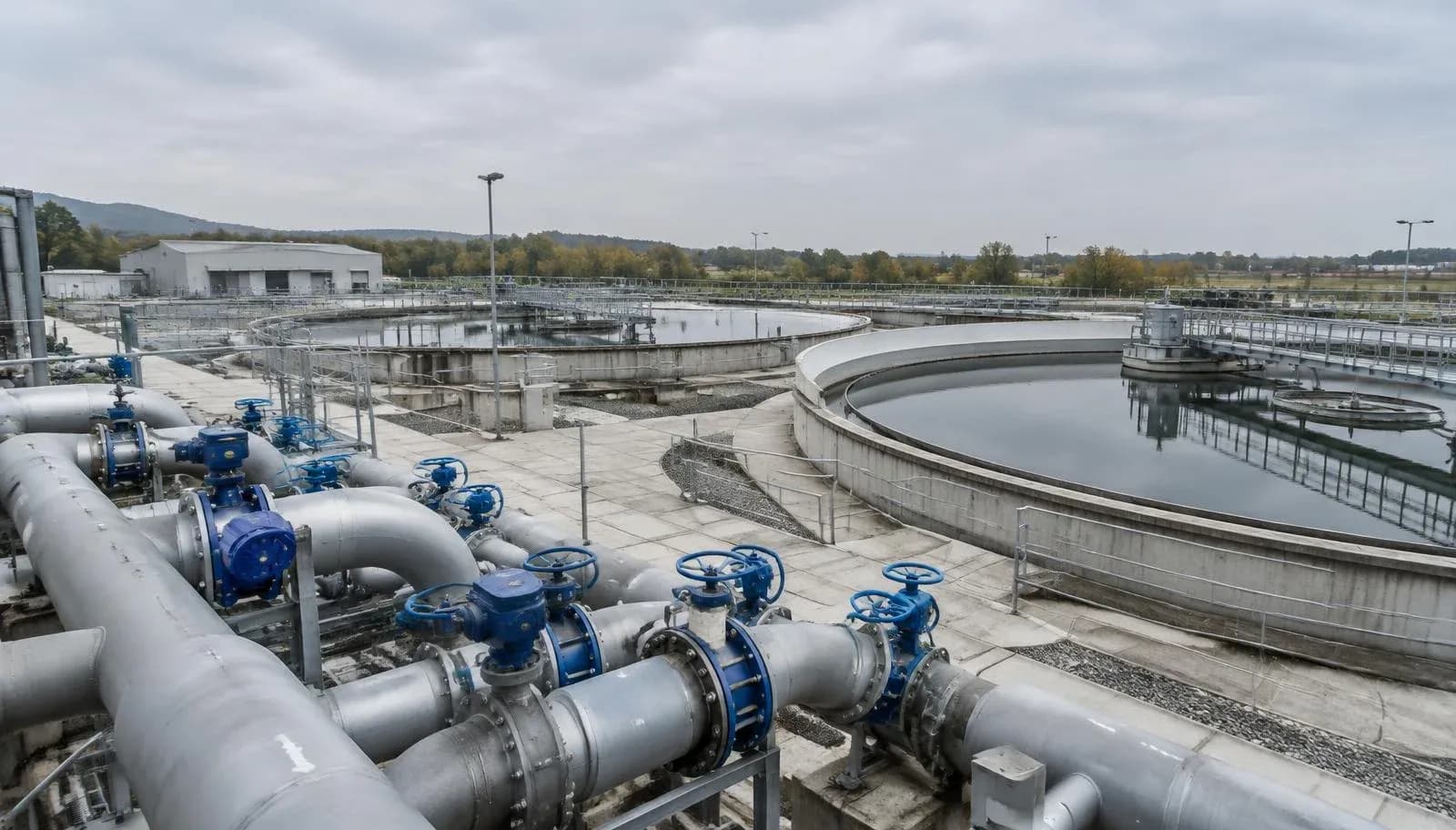
A valve that works perfectly in a clean water pipeline may not last long in a wastewater treatment plant.
The difference often comes down to what is flowing through the pipeline. Clean water, untreated sewage, chemical dosing solutions and sludge all behave differently. Each places different demands on the valve body, seat, sealing arrangement and operating mechanism.
For plant engineers and procurement teams, selecting industrial valves for water treatment is therefore not simply a matter of matching pipe size and pressure rating.
The right valve must suit the fluid, the operating conditions and the work it is expected to perform.
Which valves are commonly used in water and wastewater treatment?
Butterfly valves, check valves, knife gate valves, diaphragm valves and gate valves are among the options used across water and wastewater treatment systems.
Their suitability depends on the specific process.
Valve Suitability Matrix
| Valve type | Typical application | Main consideration |
|---|---|---|
| Butterfly valve | Water isolation and distribution lines | Compact design and operating requirements |
| Check valve | Pump discharge pipelines | Prevention of reverse flow |
| Knife gate valve | Sludge and slurry handling | Ability to handle suspended solids |
| Diaphragm valve | Selected chemical dosing and process lines | Fluid compatibility and diaphragm material |
| Gate valve | Pipeline isolation | Suitability for fully open or fully closed operation |
There is no single valve design that is ideal for every stage of treatment.
1. Butterfly valves for water distribution and isolation
Butterfly valves are commonly considered for medium- and large-diameter water pipelines.
Their compact construction can make them practical where installation space matters.
Depending on the design, they can be operated manually or with an actuator.
However, the selection should not stop at the valve diameter.
Engineers should also examine the operating pressure, seat material, water characteristics, required shut-off performance and frequency of operation.
For example, a butterfly valve installed on a clean water distribution line may face different service conditions from one handling treated industrial effluent.
When should you consider a butterfly valve?
A butterfly valve is worth evaluating when the application calls for a compact isolation valve, particularly on larger pipelines. The final choice should be based on pressure, temperature, sealing and installation requirements.
2. Check valves for preventing reverse flow
Reverse flow is an important concern in pumping systems.
When a pump stops, the pressure conditions in a pipeline can change. Without appropriate protection, fluid may flow backwards through the system.
A check valve is designed to permit flow in one direction and restrict reverse flow.
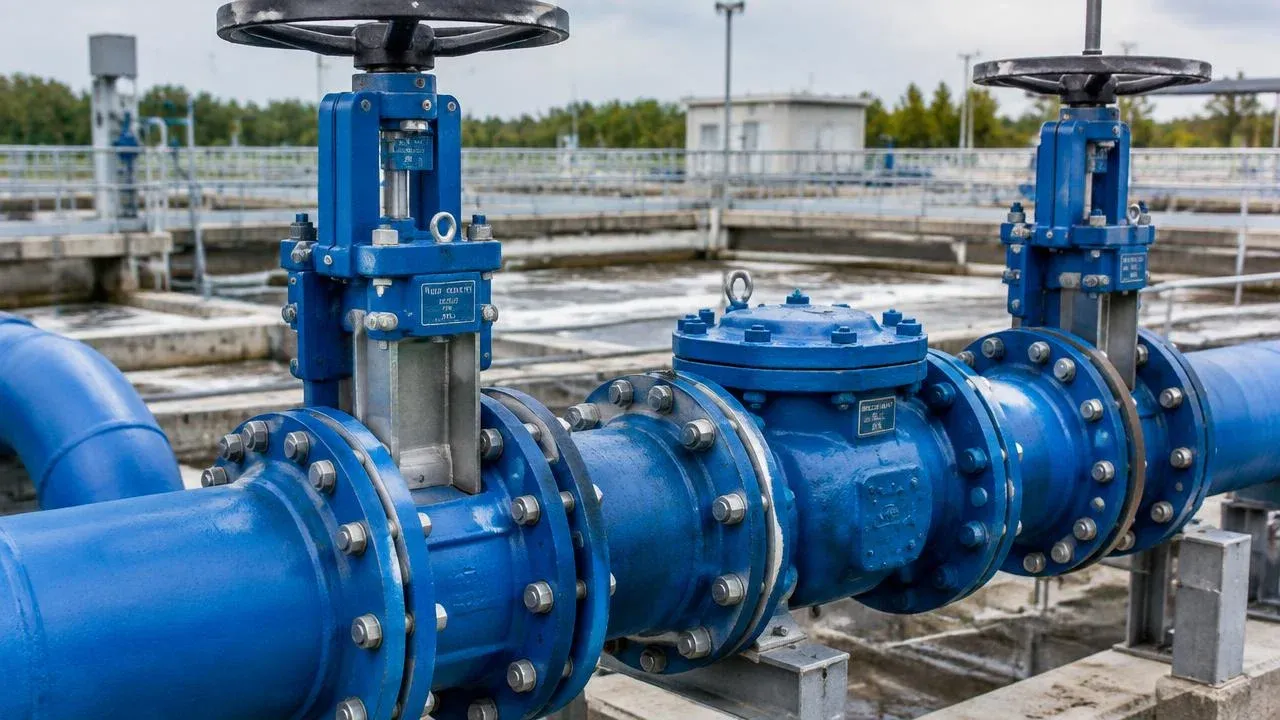
Water treatment applications may use different check valve designs, including wafer, dual plate and non-slam check valves.
The important distinction is that these designs do not necessarily behave the same way during pump shutdown.
Valve closing characteristics, installation orientation, flow velocity and system dynamics all influence performance.
Does a non-slam check valve eliminate water hammer?
Not necessarily. A properly selected non-slam check valve can help reduce the risk of valve-slam-related pressure surges, but water hammer depends on the entire piping system.
Pump characteristics, pipeline length, flow velocity and transient pressure conditions must also be considered.
3. Knife gate valves for sludge and slurry handling
Sludge handling creates challenges that are not normally encountered in clean water pipelines.
Suspended solids, fibrous material and variations in slurry concentration can affect how a valve opens, closes and seals.
Knife gate valves are often considered for these services because their design can be suited to certain fluids containing suspended solids.
However, not every knife gate valve is suitable for every sludge application.
The selection should account for solids concentration, particle characteristics, pressure differential, direction of flow and required sealing performance.
Unidirectional and bidirectional knife gate valves also have different application considerations.
Before placing an order, confirm whether the valve is intended to isolate pressure from one direction or both.
4. Diaphragm valves for selected chemical treatment lines
Chemical dosing is another area where valve selection requires care.
Treatment plants may handle chemicals for disinfection, pH adjustment, coagulation or other processes.
Depending on the chemical, concentration and operating temperature, a diaphragm valve may be an appropriate choice.
Its suitability depends heavily on the diaphragm and lining materials.
A valve that is compatible with one treatment chemical may not be suitable for another.
For this reason, material compatibility should always be confirmed using the actual chemical concentration and operating conditions rather than the chemical name alone.
Five details to confirm before ordering a water treatment valve
Is the pipeline carrying clean water, wastewater, sludge or a chemical solution?
What are the normal and maximum pressure and temperature?
Is the valve required for isolation, thinning or reverse-flow prevention?
What are the pipe size, connection type, available space and orientation?
Will the valve be operated manually, pneumatically or electrically?
These details help narrow the selection and reduce the risk of specifying a valve that is unsuitable for the actual service.
Why valve selection affects maintenance costs
The purchase price of a valve is only one part of its overall cost.
A poorly matched valve may lead to repeated seat damage, leakage, difficult operation or premature replacement.
In a treatment plant, maintenance may also require isolating sections of the process or temporarily stopping equipment.
That is why selecting the right valve at the procurement stage can be more valuable than simply choosing the lowest-priced option.
Industrial valve solutions from AMCO
AMCO Industrial Valves manufactures a range of valves used across industrial applications, including sewage, effluent and water treatment.
Its product portfolio includes butterfly valves, knife edge gate valves, wafer check valves, dual plate check valves, non-slam check valves, diaphragm valves and other industrial flow-control products.
The appropriate configuration depends on the application and operating requirements.
Planning a water or wastewater treatment project?
Share your fluid details, operating pressure, temperature, pipeline size and valve function with the AMCO team.
Contact AMCO Industrial Valves to discuss a suitable valve configuration and request technical specifications or a quotation.